
Kiefner and Associates, Inc.

Author name: Jessica Quach

Validation to Confirm Threats Result from Hydrogen Service

Validation to Confirm Threats Result from Hydrogen Service This Task 7 report was prepared by Kiefner and Associates, Inc. (Kiefner) as part of the research project titled “Investigate Damage Mechanisms for Hydrogen (H2) and Hydrogen/Natural Gas Blends to Determine Inspection Intervals for In-Line Inspection (ILI) Tools” for the U.S. Department of Transportation (DOT) Pipeline and

Validation to Confirm Threats Result from Hydrogen Service Read More »
Evaluation of Analyses for Hydrogen Relevant Threats

Evaluation of Analyses for Hydrogen Relevant Threats This report was prepared by Kiefner and Associates, Inc. (Kiefner) as part of the research project titled “Investigate Damage Mechanisms for Hydrogen and Hydrogen/Natural Gas Blends to Determine Inspection Intervals for In-Line Inspection Tools” for the U.S. Department of Transportation (USDOT), Pipeline and Hazardous Materials Safety Administration (PHMSA),

Evaluation of Analyses for Hydrogen Relevant Threats Read More »

Evaluation of Analyses for Different Hydrogen/Natural Gas Blends

Evaluation of Analyses for Different Hydrogen/Natural Gas Blends Hydrogen (H2) gas concentrations between 1 and 20% are most proposed for blending, and such concentrations have been used in pilot projects worldwide. The pipeline industry is also interested in higher concentrations. H2 blending is a complex challenge involving social, economic, and technical considerations. Various research organizations,

Evaluation of Analyses for Different Hydrogen/Natural Gas Blends Read More »

Changes to Integrity Management Reinspection Intervals for Pipelines in Hydrogen Service

Changes to Integrity Management Reinspection Intervals for Pipelines in Hydrogen Service This Task 4 report was developed by Kiefner and Associates, Inc. (Kiefner) for the U.S. Department of Transportation (USDOT) Pipeline and Hazardous Materials Safety Administration (PHMSA) as part of the research project “Changes to Integrity Management Reinspection Intervals for Pipelines in Hydrogen Service” under

Changes to Integrity Management Reinspection Intervals for Pipelines in Hydrogen Service Read More »

Recommended Revisions in 49 CFR 192, ASME B31.8, and ASME B31.8S

Recommended Revisions in 49 CFR 192, ASME B31.8, and ASME B31.8S This report was prepared by Kiefner and Associates, Inc. (Kiefner) as part of the research project titled “Investigate Damage Mechanisms for Hydrogen and Hydrogen/Natural Gas Blends to Determine Inspection Intervals for In-Line Inspection Tools” for the U.S. Department of Transportation (USDOT), Pipeline and Hazardous

Recommended Revisions in 49 CFR 192, ASME B31.8, and ASME B31.8S Read More »

Review of ASME B31.8S on Reinspection Intervals for Pipelines Carrying Hydrogen or Hydrogen/Natural Gas Blends

Review of ASME B31.8S on Reinspection Intervals for Pipelines Carrying Hydrogen or Hydrogen/Natural Gas Blends The objective of Task 2 was to review ASME B31.8S-2018 Table 5.6.1‑1 (Integrity Assessment Intervals) and other risk assessment tools and propose a technically sound basis for determining Predicted Failure Pressure (Pf) and Reinspection Interval (RI) for pipelines carrying hydrogen or hydrogen-blended

Review of ASME B31.8S on Reinspection Intervals for Pipelines Carrying Hydrogen or Hydrogen/Natural Gas Blends Read More »

Literature Review on Reinspection for Pipelines Carrying Hydrogen or Hydrogen/Natural Gas Blends

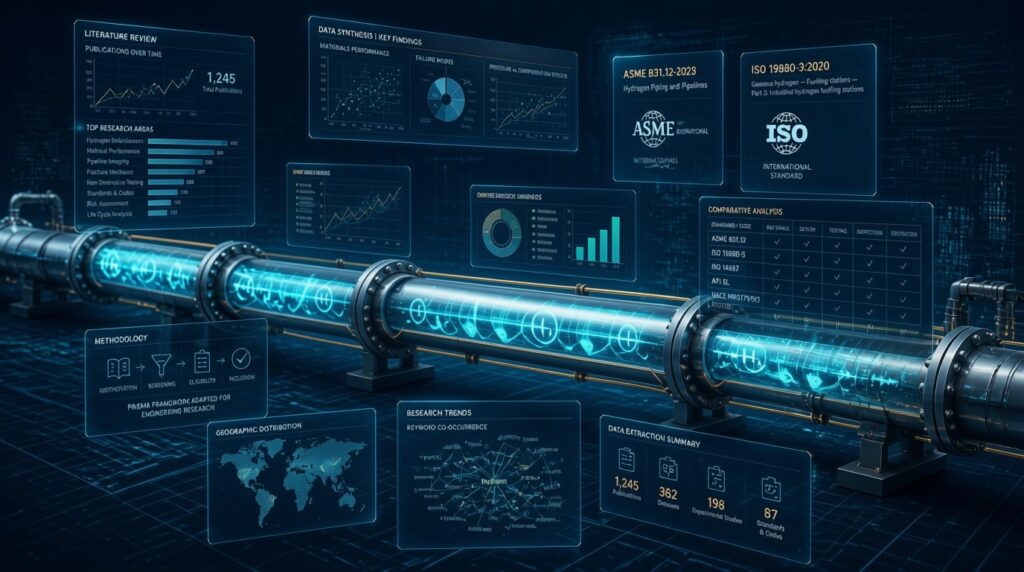
Literature Review on Reinspection for Pipelines Carrying Hydrogen or Hydrogen/Natural Gas Blends This literature review critically examined the methodologies currently employed in the U.S., Europe, and other countries, to determine in-line inspection (ILI) reinspection intervals for transmission pipelines containing hydrogen gas or natural gas/hydrogen blends. An in-depth comparison and discussion about Codes and Standards was

Literature Review on Reinspection for Pipelines Carrying Hydrogen or Hydrogen/Natural Gas Blends Read More »

Even Faster Effective Area Method: Further Optimization of the Effective Area Method for Plausible Profile Corrosion Assessments

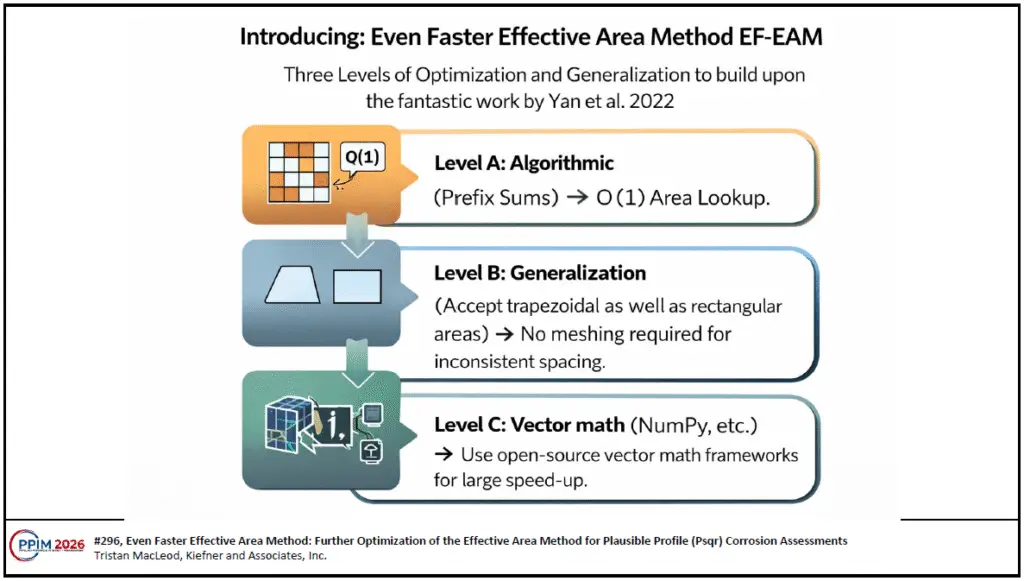
Even Faster RSTRENG: Further Optimization of the Effective Area Method for Plausible Profile Corrosion Assessments Tristan MacLeod Kiefner and Associates, Inc., Ames, USA Introduced in 1990, the Effective Area Method (EAM) established the standard for estimating the remaining strength of corroded pipelines using detailed depth profiles (“river bottom” profiles [RBP]). While using the EAM is computationally

Even Faster Effective Area Method: Further Optimization of the Effective Area Method for Plausible Profile Corrosion Assessments Read More »

A Comparative Methodology for the POE Assessment of Corrosion vs Cracking

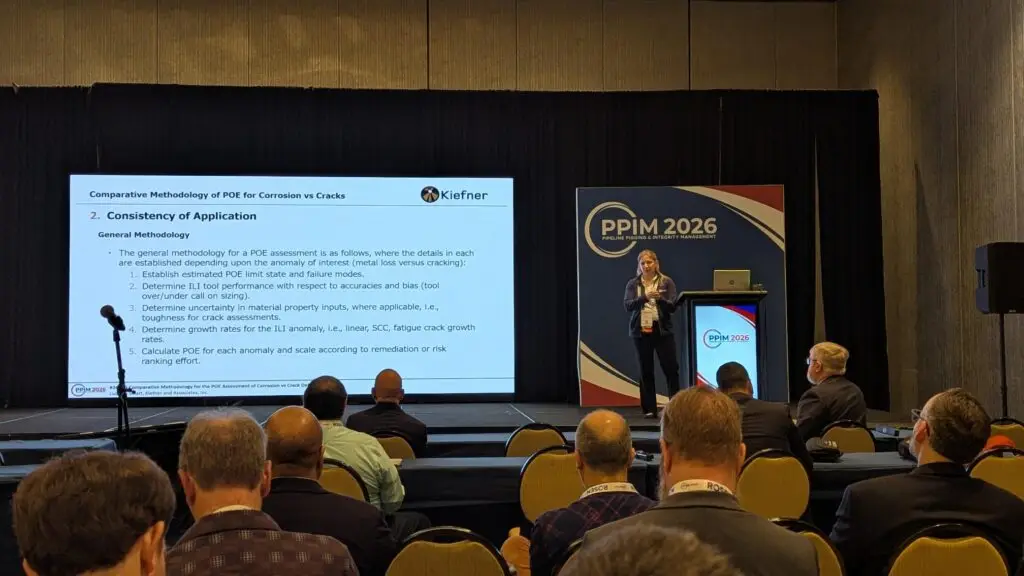
A Comparative Methodology A Comparative Methodology for the POE Assessment of Corrosion vs Cracking Lucinda SmartKiefner and Associates, Inc., Ames, USA The probability of exceedance (POE) method refers to the likelihood that a defect exceeds a specific limit or threshold, such as pressure or depth. This concept is essential in risk-based pipeline management, as it

A Comparative Methodology for the POE Assessment of Corrosion vs Cracking Read More »

Engineering Assessment of Dents Without Dent Profiles: Prioritizing Resources and Leveraging Existing Data

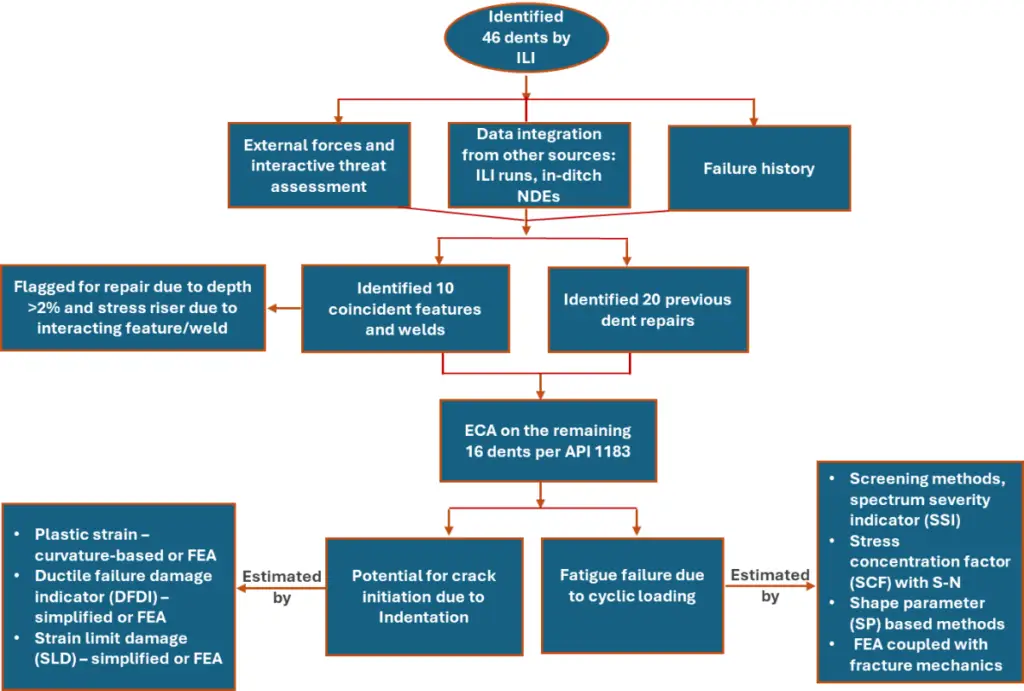
Engineering Assessment of Dents without Dent Profiles: Prioritizing Resources and Leveraging Existing Data Zahra Lotfian, PhD, PE Senior Engineer, Kiefner and Associates, Inc. Houston, Texas [email protected] Noraswad Mohamad Daud Lead Engineer, Saudi Aramco Abqaiq, Saudi Arabia [email protected] Dent integrity assessments typically rely on high-resolution dent profile data to estimate strain levels and assess fatigue life.

Engineering Assessment of Dents Without Dent Profiles: Prioritizing Resources and Leveraging Existing Data Read More »

Scroll to Top